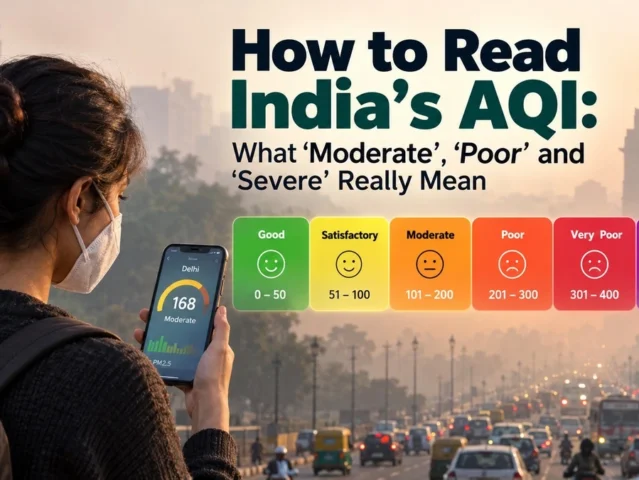




Most people check one number on their AQI app and assume it tells the whole story. But that number is usually the worse of two very different pollutants: fine particulate matter (PM2.5) and ground-level ozone. They form differently, behave differently, and affect your body differently — which means the smartest response to a bad AQI day depends on knowing which one is driving it.
Two Pollutants, Two Origins
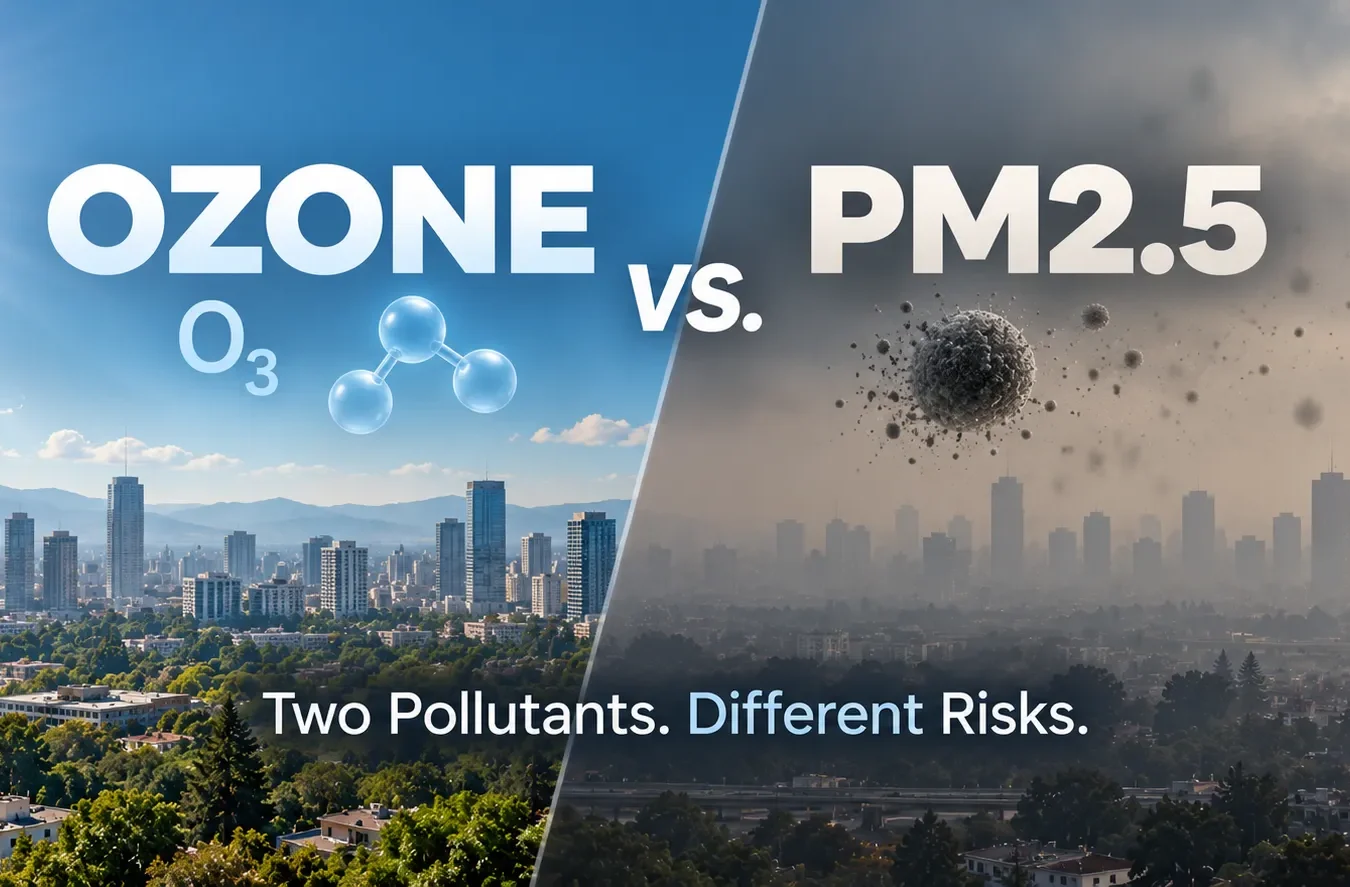
PM2.5 is physical: tiny solid and liquid particles from tailpipes, construction dust, wildfire smoke, or burning stubble. It’s released directly into the air, and on a bad day you can often see it as haze.
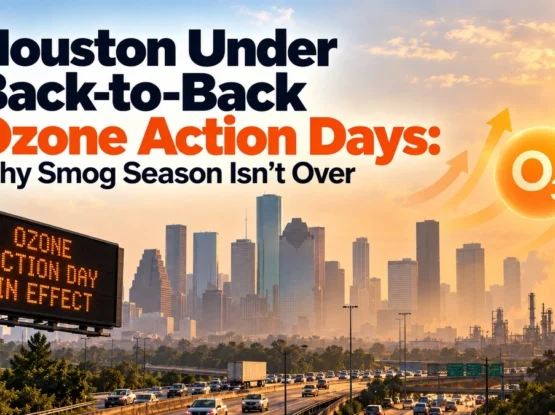
Ground-level ozone is different — it’s not released directly by anything. It forms when sunlight cooks a mix of nitrogen oxides and volatile organic compounds, both mostly from vehicle and industrial emissions. No sunlight, no reaction, which is why ozone is a fair-weather pollutant. It’s also completely invisible; you can’t see an ozone problem the way you can see smoke.
Different Clocks, Different Danger Windows
Because ozone needs sunlight and heat to form, it typically peaks in the mid-to-late afternoon on hot, sunny, low-wind days — and is usually at its lowest right after sunrise. PM2.5 follows more of its own schedule, often spiking in the early morning and evening when traffic is heaviest and the air is calmer, or whenever a direct source (a fire, a dusty construction site) is active nearby.
That means the “worst time to be outside” isn’t fixed — it depends on which pollutant is dominating your local AQI that day.
Different Damage, Same Lungs
Ozone acts like a mild chemical irritant on contact: it inflames airway tissue, which can trigger coughing, chest tightness, and shortness of breath, especially during exercise. According to the U.S. EPA and CDC, repeated ozone exposure can reduce lung function over time and worsen asthma.
PM2.5 does more of its damage by getting in deep. Its particles are small enough to reach the deepest part of the lungs, and some cross into the bloodstream, which is why long-term PM2.5 exposure is linked to heart disease and stroke risk, not just respiratory problems.
Both are linked to increased asthma attacks, chronic bronchitis, and higher rates of premature death in populations with sustained exposure — they just get there through different mechanisms.
What This Means for You
- On hot, sunny afternoons: ozone is more likely the concern — shift outdoor exercise to morning.
- On hazy, still days, or near fires/construction/traffic: PM2.5 is more likely dominant — an N95-type mask helps more than it would for ozone, which passes through cloth and most masks.
- Check the pollutant breakdown, not just the headline AQI — most monitoring apps show which pollutant is driving the number, and that tells you which precaution actually helps.
Related reading: what PM2.5 and PM10 numbers actually measure, and how AQI scales differ from country to country.