



By Arjun Mehta, M.Tech. Environmental Engineering | Air Quality Monitoring & Emission Control. Last updated: 25 September 2026.
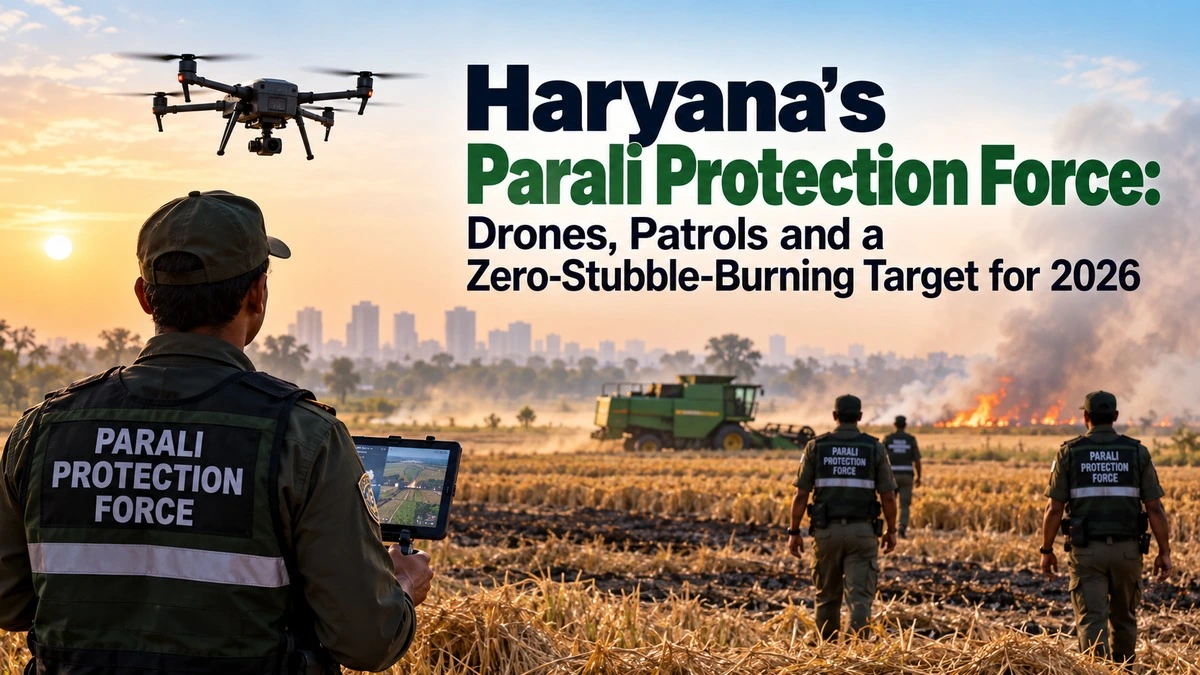
Paddy harvest has begun in Haryana, and this year the state is sending enforcement teams to the fields along with the harvesters. On 24 September 2026, Haryana’s Chief Secretary Anurag Rastogi reviewed a plan that includes a dedicated Parali Protection Force, drone surveillance and late-evening patrols to catch farm fires set after dark. It’s part of a wider push from the Commission for Air Quality Management (CAQM), which has told Punjab, Haryana and the NCR districts of Uttar Pradesh to aim for complete elimination of paddy stubble burning in 2026.
What Haryana announced
According to the state’s reviewed action plan, as reported on 24 September:
- Enforcement teams at district and block level that monitor farm-fire reports and act against stubble burning, including patrols in the evening, when many fires are lit to avoid satellite passes and daytime checks.
- Drone surveillance run with DRIISHYA under CAQM directions. Deputy Commissioners pick the villages and locations for drone flights in advance.
- Tighter supervision: each nodal officer is responsible for no more than 100 farmers, and just 50 in hotspot villages.
- Incentives: Rs 1,200 per acre for farmers who use crop-residue management machines, plus subsidies on balers, rakers and similar equipment.
- Penalties: each verified burning case can lead to an FIR, a challan, a "red entry" in the farmer’s land record, and environmental compensation charges.
Why the pressure is rising
The numbers show that enforcement and machinery have made a difference. CAQM data for 15 September to 3 November 2025 showed Punjab’s fire counts falling to 2,518 from 4,132 in 2024. Haryana’s fell to 145 from 857, a drop of more than 80%.
The problem hasn’t gone away, though. Between 1 April and 6 May 2026, during the wheat harvest, CAQM recorded 3,729 fire counts in Punjab, 2,683 in Haryana and 176 in the NCR districts of Uttar Pradesh. That’s why the Commission now wants zero burning rather than just fewer fires. A PIB release on CAQM’s May review meeting lists the plan: managing straw in the field, finding outside uses for it such as brick-kiln fuel pellets, and enforcing the rules more strictly.
Chart idea: a simple side-by-side bar chart comparing Punjab and Haryana paddy-season fire counts for 2024 and 2025 would make the drop easy to see. A second bar showing the spring 2026 wheat-season counts would show why officials still aren’t relaxing.
Why this matters for air in Delhi and the NCR
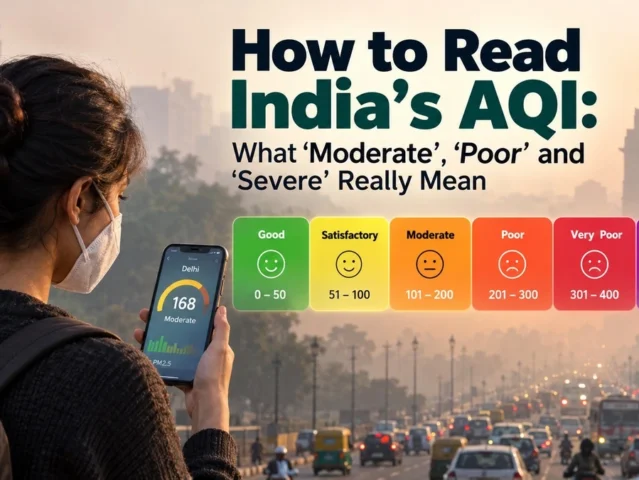
Stubble burning isn’t the only cause of North India’s winter smog. Vehicles, construction dust, industry and household fuel burn all year round. But crop fires add a large, concentrated burst of smoke in October and November, just as the monsoon has left, winds get weaker and cooler nights trap pollution near the ground. On the worst days, that extra smoke can push the air from "Poor" into "Severe." Stopping fires at the source costs far less than dealing with the smoke once it covers the whole region.
What this means for you
- Watch the official numbers. Check the CPCB National AQI portal for your city. The seasonal rise usually starts in October.
- Prepare early. If you have asthma, heart disease, young children or elderly relatives, get well-fitting N95 masks and service your air purifier before the bad weeks arrive.
- Report fires. Haryana’s plan includes a mobile app for reporting active fire locations. Citizen reports help enforcement teams move faster.
- Keep expectations realistic. Even if farm fires drop sharply, local sources will keep Delhi’s winter air unhealthy on many days.
The bottom line
Haryana’s Parali Protection Force is the most visible sign yet that 2026 is being treated as a zero-burning year. Last year’s steep drop suggests the approach can work. The test comes over the next six weeks, as the harvest spreads to more districts in late October.
Related reading: how India’s AQI categories work, and why Delhi’s air gets worse once the monsoon leaves.
Sources
- India.com: Haryana to deploy Parali Protection Force (24 Sept 2026)
- PIB: CAQM reviews preparedness of States for elimination of stubble burning in 2026
- The Tribune: Sharp drop in stubble burning incidents in Punjab, Haryana (CAQM data)
- Outlook India: CAQM directs Punjab, Haryana to ensure zero stubble burning
- CPCB National Air Quality Index portal
This article was researched and fact-checked against official CAQM, PIB and news sources and reviewed by our editorial team.