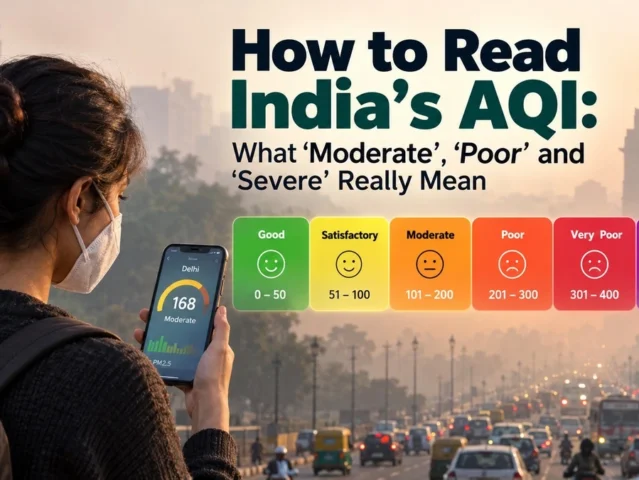





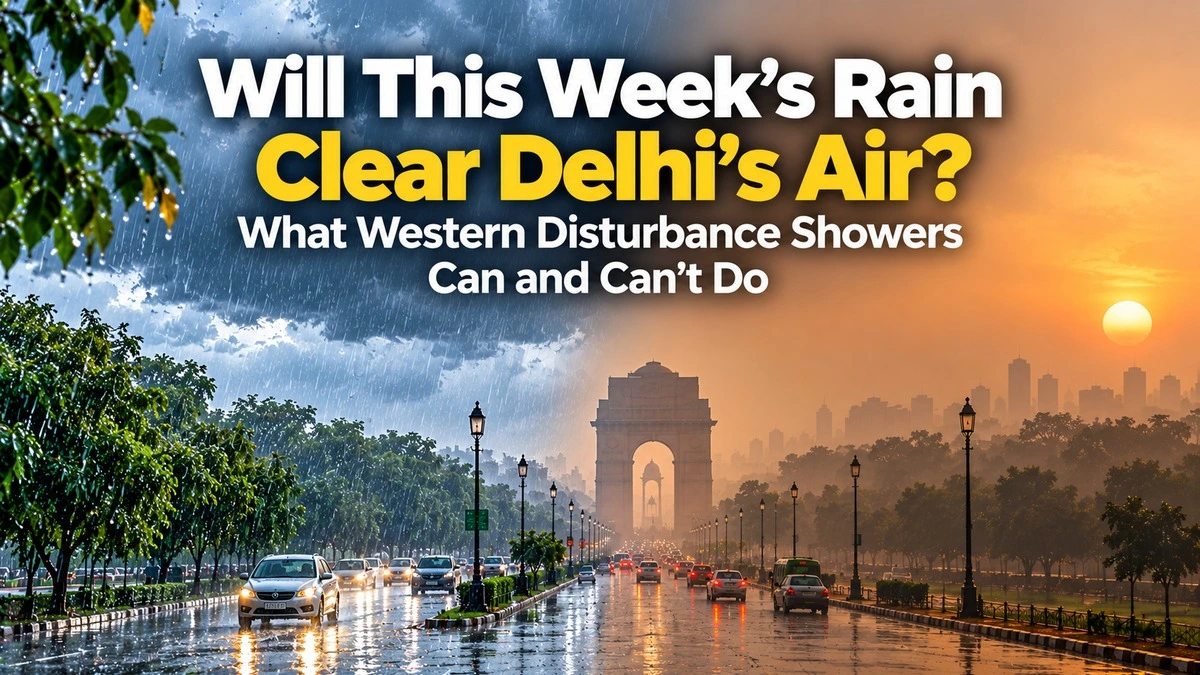
Delhi is expecting a few wet days after a warm start to October. The India Meteorological Department (IMD) has forecast isolated rain over Delhi, Chandigarh, Haryana and Punjab on October 6 and 7, and press reports point to scattered showers continuing into October 8 as a western disturbance passes over northwest India. Air quality has been hovering in the “Moderate” band, so many people are asking the obvious question: will the rain clean things up?
What’s happening in the weather
A western disturbance is a moisture-carrying weather system that arrives from the Mediterranean region and moves across northwest India. IMD had earlier said conditions were favourable for the southwest monsoon to withdraw from the rest of Haryana and Punjab, and that the region would stay mostly dry from October 2 to 5 before the showers arrive. Delhi’s minimum temperatures have also been running above the October normal, according to news reports.
How rain cleans the air
Think of rain as a sponge squeeze. Falling drops catch fine particles on the way down and carry them to the ground, which is why PM2.5 and PM10 readings often dip during and just after a good shower. Heavy, sustained rain does this best. Wind that comes with the system also helps by pushing polluted air out of the city.
Light, isolated showers are a different story. A few millimetres of rain can settle surface dust, but it doesn’t wash much out of the thicker air above. If the rain stops quickly, the effect can fade within a day.
Why the relief is usually short
- Sources don’t stop. Vehicles, construction dust and industry keep adding particles as soon as roads dry.
- Calm, humid air can trap pollution. After a shower, winds often drop. Moist, still air near the ground lets smoke and dust build up again. Our earlier explainer on the ventilation index covers this in detail.
- Farm fires are the wildcard. Rain can delay harvesting and make fields too wet to burn, but burning has typically picked up once fields dry out. Smoke from Punjab and Haryana is the main extra load on Delhi’s air from mid-October into November.
What to watch in the data
A simple line chart would show this well: plot Delhi’s daily AQI for the week before the rain, the rain days, and the week after. If the line dips on October 7-8 and then climbs back within three or four days, that’s the pattern of a temporary wash rather than a lasting improvement. A second chart could pair daily AQI with wind speed, since calm days usually line up with the worst readings.
What this means for you
- Use the cleaner window for outdoor exercise, but check the live AQI first rather than assuming rain has fixed things.
- Don’t treat a good day as the end of the season. Delhi’s worst air usually arrives later, when winds slow and temperatures fall.
- If you have asthma or heart disease, keep medicines and a plan ready now, before the smog season.
- Keep windows closed at night after rain if the air feels damp and still.
The bottom line
This week’s showers should give Delhi a short breather, not a reset. The bigger test comes once the sky clears, fields dry and the winds ease.
Related reading
- Delhi’s worst October start since 2022 and the tighter GRAP rules
- Ventilation index explained: why calm days trap smog
- Monsoon’s early exit from Delhi and what it means for your air
Sources
- India Meteorological Department (IMD)
- CPCB National Air Quality Index portal
- UNI: Monsoon withdrawal set to advance across Haryana, Punjab; rain likely on Oct 6-7 (IMD)
By Dr. Ananya Sharma, Ph.D. Environmental Science, specialist in urban air pollution. This article was researched and fact-checked against primary sources and reviewed by our editorial team. Last updated: October 7, 2026.