



By Dr. Ananya Sharma, Ph.D. Environmental Science (Air Pollution & Urban Air Quality), New Delhi. Last updated: 15 October 2026.
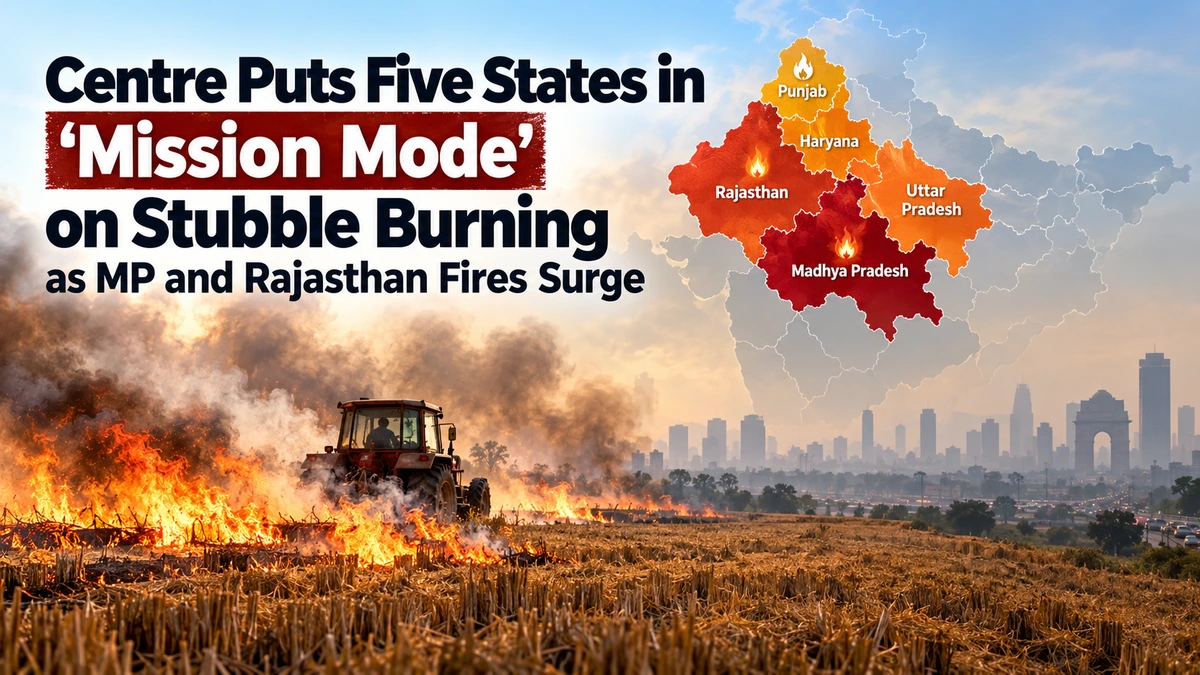
On 13 October, India’s agriculture and environment ministers asked Madhya Pradesh, Rajasthan, Punjab, Haryana and Delhi-NCR to tackle stubble burning in “mission mode”. The trigger: farm fires have jumped sharply in two states that rarely get the blame for North India’s winter smog. Haryana, Uttar Pradesh and Punjab are reporting fewer fires. Here’s what the numbers show and what they mean for the air you’ll breathe over the next month.
What happened at the meeting
Agriculture Minister Shivraj Singh Chouhan and Environment Minister Bhupender Yadav chaired a high-level meeting with state agriculture ministers and officials. States were told to meet their district magistrates straight away and tighten monitoring. Madhya Pradesh and Rajasthan were asked to identify their worst-hit districts and villages and to roll out special action plans. Chouhan called the rise in those two states “extremely concerning”.
The numbers: where fires are rising and falling
The figures below compare 15 September to 12 October with the same period last year, as reported after the meeting.
State2025 (same period)2026Change
Madhya Pradesh55277About five times higher
Rajasthan2060Tripled
Haryana––Down 53.3%
Uttar Pradesh––Down about 32%
Punjab––Reported lower
A side-by-side bar chart of the 2025 and 2026 counts for each state would show this best. Madhya Pradesh’s bar towers over everyone else’s, while the traditional hotspots shrink.
These are early-season counts. Fires usually peak between mid-October and mid-November, so the real test is still ahead.
Why satellite counts may be missing fires
Most official fire counts come from satellites that pass over North India roughly between late morning and early afternoon. An iFOREST analysis reported by The Tribune found that more than 90% of large farm fires in Punjab in 2024 and 2025 started after 3 pm, compared with just 3% in 2021. Picture a security camera that only switches on at lunchtime. Anything that happens in the evening never makes the footage.
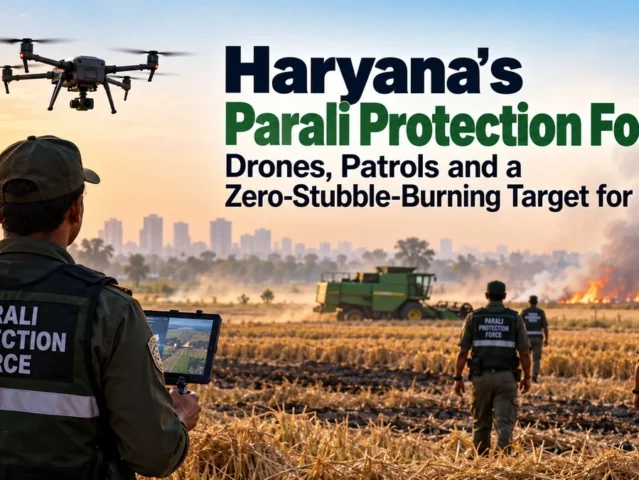
That’s why the meeting pushed for ground checks by district officials alongside satellite data. CAQM’s flying squads, deployed in 34 districts across Punjab and Haryana from 1 October to 30 November, are part of that effort. Punjab has also said it will run drone patrols, focusing on the 3 pm to 9 pm window.
The real bottleneck: 20 to 25 days
Farmers get only about 20 to 25 days between the paddy harvest and wheat sowing. Burning is the fastest way to clear a field. Chouhan acknowledged that just telling farmers not to burn “is insufficient”. He pointed instead to residue that can be worked back into the soil, or sold for bio-CNG, ethanol, power and fodder.
What this means for you
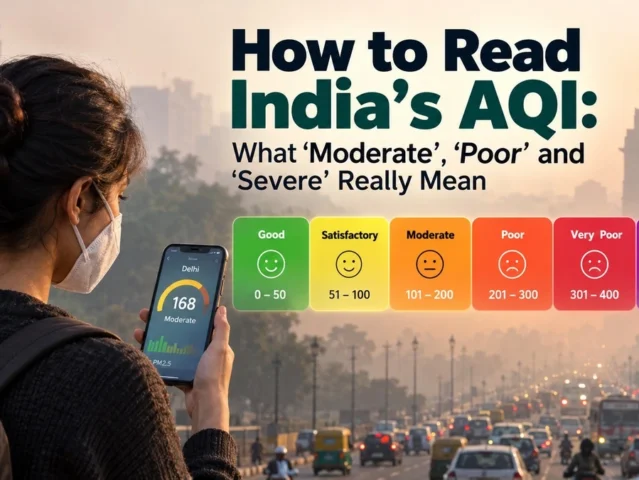
On the morning of 14 October, IQAir’s reading for Delhi showed PM2.5 at about 61.5 micrograms per cubic metre, close to India’s 24-hour limit of 60. Smoke from Madhya Pradesh and Rajasthan doesn’t always reach Delhi the way Punjab’s does, since it depends on wind direction. Still, it adds to the regional haze, and calm, cool nights later this month will trap more of it near the ground.
- Check the official CPCB AQI each morning, and look at the 24-hour average, not just a single hourly reading.
- Shift outdoor exercise to the afternoon, when the air usually mixes best, on days the AQI is “Poor” or worse.
- If you have asthma or heart disease, keep your medicines handy and an N95 mask ready for days the AQI crosses 200.
- Run an air purifier in the bedroom overnight, when outdoor smoke tends to settle.
The bottom line
Fewer fires in Punjab and Haryana is genuine progress, but the problem is spreading to new states and shifting to hours when satellites can’t see it. The next four weeks will show whether “mission mode” works on the ground.
Related reading: Madhya Pradesh overtaking Punjab in farm fires this season; how temperature inversions trap smog on cold, still mornings.
Sources
- India TV News: Centre asks five states to go on mission mode against stubble burning (13 Oct 2026)
- Business Standard: Centre asks 5 states to go on mission mode against stubble burning
- The Tribune: Satellites miss majority of stubble fires (iFOREST report)
- Punjab Kesari: CAQM deploys flying squads in 34 districts
- Bioenergy Times: Punjab to deploy drones to monitor stubble burning
- IQAir: Delhi air quality
- CPCB National Air Quality Index
This article was researched and fact-checked against the primary sources listed below and reviewed by our editorial team. Figures are as reported on the dates shown and may change as new data comes in.